

When the Scratching Won’t Stop: Understanding Allergies in Dogs and Cats
Does your pet excessively lick or scratch themself? Are you noticing ear infections that just keep popping up? Tummy troubles after eating, hot spots, or hair loss? These could all be signs that your furry friend has allergies.
What are allergies? The immune systems of dogs and cats are just like ours! The white blood cells and antibodies do their best to fight off any infections or unknown substances we may encounter. Sometimes, though, the immune system overreacts to certain substances called allergens. If allergens are inhaled, ingested, or touched, they cause the immune system to go into overdrive which results in swelling, itchiness, etc.
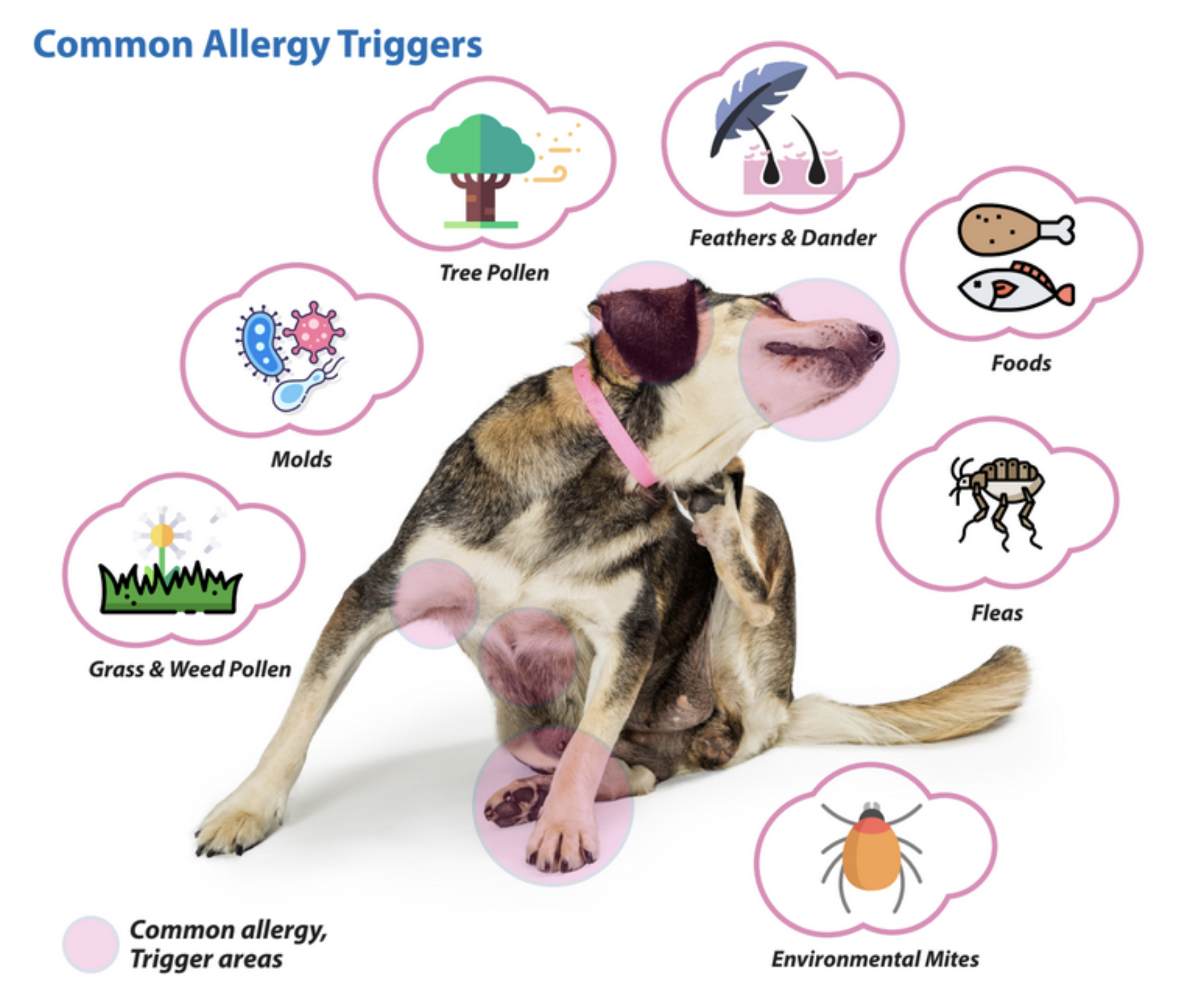
Pollen Problems and Seasonal Sneezes
A common cause of allergies in our pets is exposure to environmental allergens during walks, outdoor play, or even a breeze through an open window.
Seasonal Allergens:
- Trees
- Grasses
- Flowering Plants
- Weeds
Year-Round Allergens:
- Dust Mites
- Mold or Mildew
The primary symptom of seasonal allergies is increased itchiness. Your pet may start to scratch and/or lick their body and paws, or rub their face and ears. In more serious cases, you may begin to notice scabs, hot spots, and patchy hair loss. This is known as Atopic Dermatitis.
Scratching the Surface: Could Fleas or Ectoparasites be the Culprit?
The most common cause of allergies and itchiness seen in dogs and cats is Flea Allergy Dermatitis (FAD). When a flea bites your pet, a protein in their saliva causes an allergic reaction.
Fleas usually only spend minutes to an hour on your pet to feed. So, unless there is a full infestation of the environment, you may not even know your pet is suffering! Even one bite from a flea can trigger a severe allergy response that results in:
- Intense scratching and overgrooming
- Scabs or hot spots
- Hair loss (resulting in crusty skin susceptible to bacterial or yeast infections)
Pets with other forms of allergies (seasonal, environmental, food) tend to be much more sensitive to FAD. When diagnosing FAD, Dr. DeForge will be looking for intense scratching/hair loss in the Flea Triangle (the middle of the back to the tail base and down the rear legs). FAD may seem like a seasonal issue; however, your pet can get fleas at any time. It is critical to have your pet on a flea and tick preventative year-round, even if they are indoor only!
Along with fleas, another cause of itching and irritation are ectoparasites like mites. Examples are:
- Demodex Mites (causing demodectic mange )
- Sarcoptes Mites (causing scabies )
- Ear Mites
Food Allergies: Not Just a Sensitive Stomach
Food allergies can also be associated with dry flakey skin, itching, and gastrointestinal upset (vomiting/diarrhea). Unlike seasonal allergies, the effect of food allergies is not connected to a certain time of year.
The most common food allergies in cats:
- Fish
- Beef
- Chicken
The most common food allergies in dogs:
- Eggs
- Wheat
- Chicken
- Beef
- Dairy
Contact Allergies: When Touch Triggers Trouble
The least common source of allergies in dogs and cats is contact dermatitis. This occurs when an allergen comes in direct contact with your pet’s skin – which is usually prevented by their coat.
Common Contact Allergens:
- Plants
- Cleaning products
- Flea collars/topical treatments
- fabrics/materials
- Insects
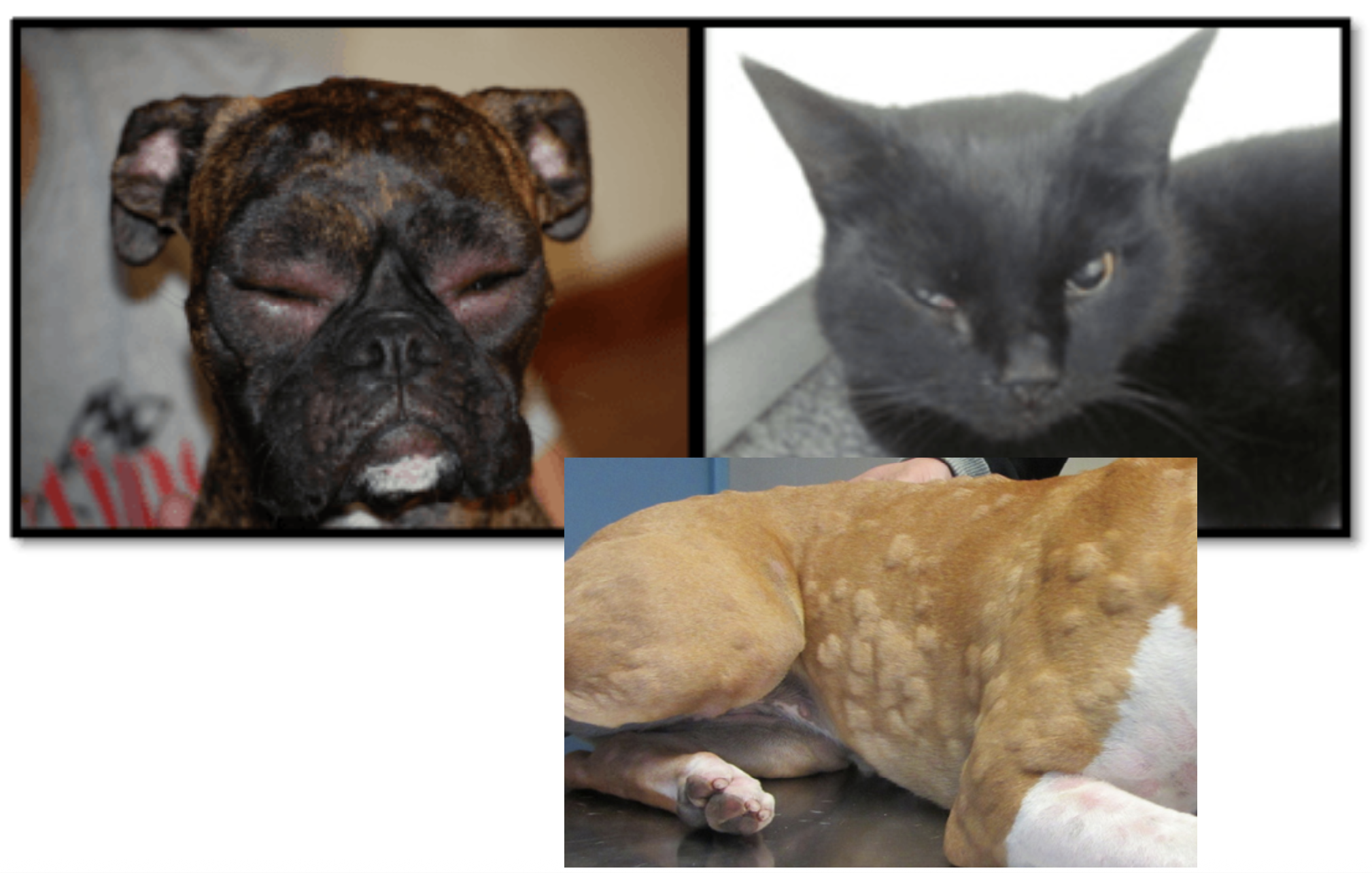
It is important to watch for signs of contact dermatitis reactions in your pet – hives, rash, redness, swelling, difficulty breathing . Some of these symptoms could be indicative of a serious anaphylactic reaction, which requires immediate medical intervention.
Preventing the Itch Before it Starts
Pet allergies can be very frustrating and can cause your pet a lot of discomfort. Thankfully, once diagnosed, most types of allergies are completely preventable! There are multiple treatment plans, medications, and special diets for animals experiencing allergy symptoms.
Oral Medications:
- Antihistamines (Loratadine F1 , Diphenhydramine F2 , etc.)
- Oclacitinib F3
- Ilunocitinib F4
- Cyclosporine F5
- Corticosteroids (Prednisone, Prednisolone, Dexamethasone, etc.)
- Flea and tick medications (Afoxolaner F6 , Sarolaner + Moxidectin + Pyrantel F7 , Lotilaner F8 , Fluralaner F9 , etc.)
Injectable Treatments:
- Lokivetmad F10
- Steroids
Topical Treatments:
- Creams/Ointments (Hydrocortisone 0.1%, Triamcinolone 0.1%, etc.)
- Sprays (Antihistamine, Pramoxine, Lidocaine, etc.)
- Medicated Shampoos
- Flea and Tick Medications (Esafoxolaner + Eprinomectin + Praziquantel F11 , Fipronil + (S)
- Methoprene F12 , Selamectin F13 , Fluralaner + Moxidectin F14 , Imidacloprid + Flumethrin F15 , etc.)
Food Elimination and Specialty Diets:
If you suspect that your pet has a food sensitivity, Dr. DeForge may recommend trying a food elimination trial. This test is used to determine if a specific component of food (usually a protein) is causing the allergy symptoms. Dr. DeForge would recommend a special prescription diet that you will feed your pet until the symptoms go away. Then, you would slowly reintroduce the possible allergens one at a time until we can identify the trigger food(s). The best food for this test is a Hydrolyzed Diet. In these foods, proteins are broken down into smaller components, so that the immune system cannot recognize them. Dr. DeForge and our team will help you closely monitor your pet’s condition, just in case the diet needs to be changed.
Let’s Get to the Bottom of the Itch
Allergies can be a source of constant discomfort in your pet – but they don’t have to be. Whether it’s fleas, food, or something in the air, the key is identifying the cause and starting the right treatment plan.
If you think your pet may be dealing with allergies, don’t wait. Give us a call so Dr. DeForge and our team can help your furry friend feel better, itch less, and get back to their happy, healthy self!

Brand names of drugs listed above:
F1 – Claritin (dogs and cats)
F2 – Benadryl (dogs and cats)
F3 – Apoquel (dogs and cats)
F4 – Zenrelia (dogs only)
F5 – Atopica (dogs and cats)
F6 – NexGard (dogs only)
F7 – Simparica Trio (dogs only)
F8 – Credelio (dogs and cats)
F9 – Bravecto (chewable – dogs only)
F10 – Cytopoint (dogs only)
F11 – Nexgard Combo (cats only)
F12 – Frontline Plus (dogs and cats)
F13 – Revolution Plus (cats only)
F14 – Bravecto Plus (topical – cats only)
F15 – Seresto Collar (dogs and cats)
*Please consult with Dr. DeForge before using any of the above medications!*